Sunday, 22 February 2015

Faith in Reason

Science is based on reason. On explanations and on facts. Why something is as it is is because of a fact. However, what makes the concrete fact believable, is faith. Faith that the fact is true. So ultimately, all reasoning, seemingly pragmatic and practical they are, have to be backed by an esoteric faith.


1. Every action we act on have a reason.
2. Our action can be categorized as conscious and subconscious.
3. In consciousness, we have a pre-formulated intention or reason for our actions regardless if it is morally right or wrong.
4. In subconsciousness, it is due to preexisting assumptions and actions which makes us act as we did.
5. That previous assumption or action is due to us having a reason to do or assume so.
6. Every action have to be justified by a reason. (From Premise 2,3,4 and 5)
*Interestingly, this means Forgetfulness does not need a reason because there was no action and hence no thought to it. It just did not exist, thus not being backed by any reason. When people ask, "Why did you forget to do _____?" It is an unanswerable question.

But what justifies reason? What justifies explanations such that it is credible, believable and infallible? Reasons are reasonable and explanations explainable because it is backed by facts. But what makes facts right always boils down to how much we believe in it being right. It is ironic how science have to be backed by faith, the very thing it is trying to disprove, in order to be credible. So in a larger sense, everything is as it is due to the amount of faith we have believing that it is. 

A person asks why is a table solid. Because it is hard. because it is made of closely packed atoms. Because we can see the atoms. I believe in what I see. I believe in the concept that the closer atoms are packed together, the more solid it is. Believe. A person felt an itch on his nose. He believe that he felt the itch. He believes of a biological reason that made him feel itchy. It is logical. His logic is proven by his belief that it is logical.

An interesting idea came to me. And I thought, since the amount of faith in an intangible thing gives rise to its credibility, can we create something out of nothing and give it existence? And actually, I found out,  we already did. I watched a video by an amazing orator and philosopher, Jason Silva. He is behind an amazing YouTube series titled "Shots Of Awe". It was a talk about "Are we Gods?" held at the Sydney Opera House some time last year. He talked about how the Manhattan backdrop, every street, every conception is literally our thoughts brought to reality. Brought to existence, so believable because it is there. Amazing. He talks about language as the conception of our thoughts. Language is the product and medium of our imagination. It is one of the first and foremost creation which helps make imagination into reality. Language was conceptualized in our mind and it is a thing. We believe in it. An intangible thought which is existential. Just like measurement, our believe in it causes it to exist and we never doubted them.  This could be the reason why we could "naturally" know the grammar of a language if it is right or wrong when we said a sentence. Medieval English is so different from Modern English such that it would be almost impossible for us to know what is being said then even if we both speak English. Same as how Future English will be so different than how English is being spoken now. But somehow there is a right and wrong in the grammar of English and we know it. "The house painted." The pragmatics just know that it is impossible for it to happen, so it is wrong. Faith in the logic have created grammar logical to our brain.

Which is why not all imagination can be real and conceptualized. Unicorns just cannot exist because we already know deep down that it cannot exist. Unless one really existed and is seen by us.Then, it is real. If we try hard into wanting to believe in something, if we do not, it just cannot exist. Traceurs often employ this to break psychological barriers. Because what traceurs or parkour enthusiasts often do often boggles ones belief. How can a person run up a wall or scale up a 2 meter wall? How can one do a Kong Vault, leaping over an obstacle with only their palms eventually touching an obstacle, and land on the other side and succeed? Someone must show them that it is possible. And after they succeed, they know it is possible themselves, they could do it over and over again. Their success in a move is conceptualized and believed. It exists.They manage to break the illogical psychological barrier and do what seems impossible, because it is possible. And when they believe they themselves could do it, by successfully doing it themselves, their belief in doing a move would be even greater. Another thought. If someone was not learned in the Laws of Nature or Physics, and thought of something which defies it, is it possible to actually defy it? Is it possible for an innocent child to create Santa Claus? Is that why in some written accounts strange things could be seen and believed by small children? Because the adults just know it could not have happened but a child does not, so the child creates that being. That being is actually real. Because theoretically from the way this argument is going, if we believe in something being there, it is there. If we do not believe that something is there, it is not there. But if we believe in something which is not there is there, it is there. It exists. Our faith creates an impossible entity.

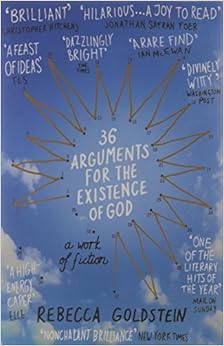
This can pave way to so many possibilities. On religion. On literally mind over matter. Descartes once mentioned "I think therefore I am". Because he can think, therefore he exists. Or else what else can he be? When I think as how he thought, I have this weird sensation about being just who I am now and the things around me. In Rebecca Goldsteins 36 Arguments to the Existence of God, she talked about the Improbable Self. "Jess there, Cass here." Similar. Psychologically speaking, believing can also be useful. The power of thought. Anyway, it is a long shot and proving it can be close to impossible. Of course, that could be because we or rather I believe it is impossible to prove. In the fiction Hitchhiker's Guide to The Galaxy by Douglas Adams, a scientist created the infinite improbability drive by deriving how improbable it is to create one and he created one. It is thinking out of the box, the impossible. There must be a way. Our human mind just would not want to comprehend the incomprehensible. That is why we do not believe in faith to govern our facts. Some day I believe we can find truth which is not governed by faith. Because I have faith we can. Until next time, Wan.