Friday, 11 December 2015

Movement


Receiving an instruction and acting upon it can take milliseconds or it can take a minute. Either you instantly act upon the action affirmatively and instinctively or you sort out your mind trying to obtain some discernable logic in the instruction before you act upon them. The knowledge had already been embedded in our large memory scape. Once seen, once remembered and forever captured. However, finding that knowledge requires practice. Practice, is the key to movement.

I like to visualise our brains as a landscape of bright dots which are “knowledge”, an immaterial entity which stores ideas. And between these ideas, there is a neural network connecting each “knowledge” to one another until it reaches a starting point which is “affirmed action.” Electric pulses run through these networks each time you need to do or to know something. When deciding on something, your mind needs information. It sends a signal which races through the network, and searches for this “knowledge” which will tell you something about the information you need and you act upon that information. But because the amount of knowledge which can be stored in our brains are almost limitless, because we can remember and store so many things, this network is vast. There are so many chains, so many links such that potentially, one thought can remind you of another in an instant precisely because they are linked in some reasoning or another. However, when we want to access certain links, by wanting specific information, suddenly we might not be able to find the link. Because of that, we fail to find logic behind an instruction, which leads to delayed logical action. This might be because the link may be remote. A specific word, or a feeling or a scene which we used at the beginning to obtain that information may be the trigger which triggers the chain of links to that knowledge, so you remember. This means that if you do not have that trigger, you will delve and think until you reach that trigger, be it a “feeling” or “scenario” (example: a visualised smell of cotton candy) and then the current connects and you can remember, even if you thought about an information halfway between the “knowledge” and “action”.

But this can be remedied by studying a hypothesis about conscious and subconscious thought. The amount of thought a person process in any given point of time is impossible to tell. There are studies done in the Sleep Labs in Tel Aviv, Jerusalem which can show us the amount of conscious thoughts a person could have, but it does not take into account the subconscious thought a person could be having. This is bad because it is widely believed that subconscious thoughts make up 80% of thoughts at any given point of time. A conscious thought is a thought which you are aware of the link between action and knowledge. But subconscious thoughts are those that you do not know the route and links in your brain but they exist, so the pulses link almost unknowingly by you from trigger to knowledge to affirmed action. Malcolm Gladwell’s Blink went on to describe this phenomena which have been utilized by firefighters during decisive moments while battling fires and by art curators in judging the authenticity of unearthed ancient statues.

I will try to hypothesize based on experience. For a long time now, I have relied heavily on conscious thoughts to carry out an action. It had been inbred in me and anyone else who tries to study and pass an exam. The method of examinations requires you to know and regurgitate out the “knowledge” clearly and sometimes it even requires you to regurgitate the links connecting the instruction to the knowledge. In examination, to know you have learnt what you have supposed to learn, you are required to tell the examiners that you know. Thus, everything is in the conscious. That is why when you have read a certain paper perhaps and you are tested on it, but you have not carefully memorized or internalized the information, you will seem to “know” the answer but will not know what to write or how to put it. Or you think you know, but you fail to find logic behind your answer. You have yet to form a conscious link and thus it appears as if you do not know the answer. Of course, this method may have been useful when I was studying. However, it was a bane when it comes to certain real life experience. For example I have been an ambulance medic for more than a year. My job, essentially, is to assist the paramedic in providing emergency treatment to patients. And working in an environment where every second may be the difference between life and death, slow, conscious thought is truly a bane. In reality, how these men have actually worked uses a lot of experience which translates to subconscious thoughts which is activated by conscious triggers. What I mean is when a paramedic assessed a patient and found him or her to not have a pulse, the paramedic would instantly consciously trigger a chain of links in the subconscious and then they act like robots to do what they can to save the person’s life. They already know what to do and that is experience. There is no time to think from one step to another. There is, inserting the Laryngeal Mask Airway, applying Defibrillation Pads, giving oxygen supply, applying LUCAS on the chest, running an IV line in the patient’s veins and preparing adrenaline to inject into the body. All these must be remembered in an instant and you must be calm and composed while doing so. And impressively, they can do so by experience. When I was first posted as an ambulance medic, I try to think of the steps from one step to the other rather than trust my instinct. When paramedics gave me instructions, I think and rationalize on the instructions first and because of my inexperience, I fail to see logic behind certain actions. Those made me think and ask “why” and it costs me precious seconds before I would act, rather half-heartedly. A valuable lesson was rendered to me by an Encik Zul who was frustrated in my slowness. “You think too much. Don’t think just do. Your job is to assist and not be a bane.” And true enough, after I made it a point to just do as a paramedic asks and stop asking why, my actions became faster. I began to see reason behind the instructions of an experienced person after doing whatever they say and pretty soon, I could reason and anticipate the things which should be done on each ambulance calls which made my actions one step ahead of what I was capable of doing. 

Similarly, a same thing happened when I was working as a Tax Officer. The training period was 8 days and we had to memorize a lot of information about tax and how to use the Avaya communication system and internal tax network. Just by studying theoretically was not enough when answering a taxpayers call. I had to think back on my lessons consciously and because of that, my call time per taxpayers was high and in fact every one of the new interns had low KPIs. But IRAS have a trial period for new tax officers to learn the ropes of the system. They will ensure we receive calls and assured us it is okay to get long call times per taxpayer. Pretty soon, I got a hang of using the phone and we started having fun manning the lines and answering taxpayers enquiries because it became instinctively easy to a point when a standard question was posed by a taxpayer at the start of our conversation, we already know what to research on the database and could readily provide them when asked instead of putting them on hold to search slowly where the information are. Practice is very different from theory indeed. Experience is very valuable indeed.


Thus is a long tale about movement which I try to visualize as electric pulses and connections. Interestingly, this visualization can be applied into almost every context. In my blogpost “We Perceive Patterns in Life” I tried to prove a point that the world is just patterns. The world is just patterns over patterns which we used to mix and match to create new things and that everything in the world is really connected to everything else in a finite space. A finite entity. Movement in life be it fast and smooth or slow would be abstract, would it not be? That, is just a conscious thought.

Thursday, 10 December 2015

About race and man

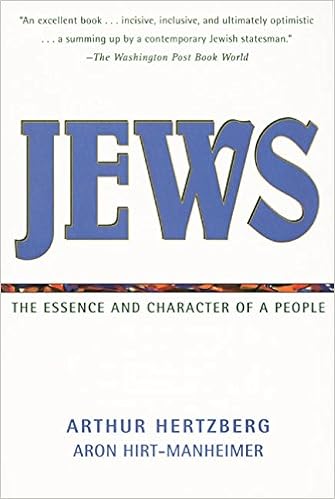
Recently I read a book titled JEWS: The essence and character of a people. It was written by Arthur Hertzberg and Aron Hirt-Manheimer, the former being a scholar in Jewish history and a former rabbi. The purpose of the book was to define what it means to be Jewish and to give reason to the character of the Jewish people. It tries to infer to us the mindset of an ordinary Jew and the reason behind the mindset of ordinary Jews which had made them such an exceptional people. In my opinion, the book is an insightful view into the eyes of a Jew and it tells us to great detail of the way of life of a unique and incredible culture. In truth, I read the book and continued to read it in hope of finding what it takes to replicate the Jewish culture which have produced such incredible men and women and to find out the characteristics and reason why the people are so distinguished among non-Jews. B.F. Skinner, the acclaimed psychologist, wrote a few theorized possibilities and they might explain why this race could produce such fine men throughout the ages.

One, human character and behavior tend to pass down from ancestors, presumably from genes, which would culminate into the present living man we see now. That means that brilliant men who had done incredible feats or have pushed themselves to their limits in their lifetime whether mentally or even creatively would most likely pass the genes of these “effort”, thus it becomes an almost subconscious thing to produce works of genius among their descendants. This theory gives credit to all the ancient civilizations for they have mastered the art of sophistication and of living since a long time ago and therefore its descendants should be more well-bred and cultured than others who had always lived in a smaller community and had more trivial priorities. I am inferring that descendants of great civilizations should have a wider perspective of the world. In this theory, whatever we experience would unlock a memory of our ancestors and thus we behave as what they have learned. That is how our aggressiveness and competitiveness comes into being and that is also how we might explain why different cultures may be different. For example, Asians are thought to be more docile than Westerners.

Secondly, the other theory is that all what we experience in our immediate life and our immediate environment would grow on to shape our character and behavior, perhaps even more so than genes could. This gives chance for those of less prominent ancestry to be able to make his or her mark in history. Of course, since environment plays a large part in building our character, a tradition of following the way of life of your ancestors would most likely bring about similar behaviors and traits and thus it made it seem as if genes had something to do with the passing of traits, thus debunking the first theory. B. F. Skinner of course felt it most likely to be a mixture of both, as written in his book Beyond Freedom and Dignity. We are both past and present to create a future.

So the Jewish folks fulfill both theories which might explain how this race of people could produce such fine individuals. Firstly, since the time of Abraham and his descendants with Sarah, the Jews had often produced remarkable men who made their mark in history. Since the Middle Ages to the Nazi period up till now, they have been despised for being who they are. Some historians conclude the Jews were despised for their apparent success in the world and for being rich or for being smart. Since the time of early Jews, the Jews are easy to be made scapegoat of for their apparent stubbornness against mainstream culture, insisting on Jewish pride even as a minority. Success certainly appears to run in their veins and if the first theory holds true, it is not obvious why they continue to produce such fine individuals with such rich ancestry. Success is in their genetics. 

Secondly, since the time of Abraham, the Jewish people had often stubbornly lived their own separate lives from society. They oppose the common ideologies of whichever civilization they reside in, just as in Abraham who chose to pray to the “one true God” instead of the different deities of his time in Ancient Babylonia. Then in Moses, who rebelled against Rameses II to save his people in Ancient Egypt. A story passed down was that during the Roman civilization, when the Romans tried to respect the Jews by offering them to share an altar in their temple for their God together with their other deities, the Jewish Rabbis refused. They constantly hold an always contrasting view to mainstream view. Even when Abraham had lived among the Bedouins in the deserts of Canaan, he had always lived in his tent open to society, always kind and giving to the Bedouin strangers, but always keeping to himself his practices and way of life. He chose to live as an outsider and stranger rather than be part of the society. Joshua Wolf Shenk’s book Powers of Two: How Relationships Drive Creativity, talked about the hidden genius behind successful people. It takes two people of specific characteristics to complement each other and produce works of a genius. And obviously enough, the vital source of creativity and innovation stem from the person with an outsider’s perspective; one whom do not follow the custom of the other and reasons and lives quite differently from the other. This outsider perspective approach enables them to offer a creative solution or idea to the then today’s problems. And the Jews have a rich tradition and custom of living their own life which some have not changed for thousands of years, always contradictory to mainstream culture. After all, they, as admitted by the authors of Jews: The essence and character of a people, the Jews have an indoctrinate pride of being a Jew. Be it being casted away from society and treated harshly, they still hold on to the notion of being God’s chosen people and that they are the prime example which mankind should emulate. It offers a siege mentality of “us against the world” for many centuries, but however they were also inculcated moral values to follow, thus they must always treat others good. The more they suffer through the centuries, the more they try to do what is good and right, for they have to be that as chosen people. “Let them hurt you, do not hurt them back. It shows that we are better people.” And since this concept and environment which they were brought up in teaches and brainwash them into thinking that they are better people; it became a stimulating environment for them to become geniuses and work hard against the odds. In Powers of Two: How Relationships Drive Creativity, it talks about stimulating environments such as cafes in the early 1900s and the dot com era and even Pixar and Google headquarters where people who wants to make a difference go to such places to meet other like-minded individuals to start something fresh and new. And the Jews have created a sort of society and environment which breeds and cultivates minds and talents.

Over the years, as the Zionist movement picks up, there are left wing Jews who wants to vent against those who oppose them but the authors of the book denounced them and I certainly hope that many Jews hold the same viewpoint. It is understandable, as their mindset of always being the victim might have turned them weary. They want to have a say and fight back. They want to defend Israel, their given homeland after a long Diaspora. But these Jews are not being true to their ancestors and heritage. The resilience of the old Jews come from their pride and the hope for the coming Messiah who will set things right in the world. After years of being oppressed by society, the resilience may have dropped. They should continue to live and uphold their reputation, as in their eyes, as being better civilized men. And for that they will be respected. It is true that giving land away from the Promised Land is a crime in their Holy books and for that then President Yitzhak Rabin of Israel was assassinated for giving back part of the annexed land in Sinai back to Egypt. However, the oppression to the Palestinians and building of settlements on annexed land seems rather unruly. At least, respect and act as if the Lands are not owned by you, and live as you would have lived as a model society. Live right on your own, do not intervene. Palestine seemed to be a hurtful thorn to the vision of Israel, a pinpoint in which the Muslim World constantly uses to hurt Israel from as close as possible. And as such, it seems prudent to get rid of them permanently as a solution to end a sticky problem which constantly plagues Israel every day. These leftists can be equally compared to the radical Muslims in the world, people who are condemned by the morally upright others who live justly as God had prescribed them to .But that is not how a dignified race should act.

I find the concept of Islam similar to the traditions of early Jews. Consider this, Islam was founded by a Prophet Muhammad, Peace be upon him, who migrated to another city Madinah and lived as a Muhajirrin (traveler) after being chased away from his home city of Makkah. He and his followers are similar to an outsider and the form of governance and religion they formed opposes the whole of the Arab lands who prayed to various deities, similar to the stories of the Jews. The way of life prescribed in the Quran is distinctly different from the laws of today. Just as the Jews, they have strict conducts and moral values to follow which shows how one should optimize their lives and respect their modesty and by today’s standard, they both appear to be lacking of freedom and flexibility. But this mindset is through the perspectives of a person with different values treasured. A Muslim society may not seem fun, but they eradicate problems plaguing countries such as US which have unhappy households, divorces, unwanted pregnancies, bastard children, uncontrolled pornography and violence. Incredibly, there is more gun violence per 100,000 people in US than there are in Afghanistan which means I have more chances of being shot at in the US than I have being in Afghanistan. With the current situation in the world media now portraying Muslims as the bad ones, it is creating a siege on the Muslims just as how the Jews had been in “siege” for centuries. I would suggest Muslims to embrace and not fight back especially among ourselves and to live as we were meant to without outside influence. Our backlash could be due to the numerous interventions by outsiders which constantly destroy our way of life. Living as we have been, an outsider with a different view of the world might just be our salvation just as the early Islamic Civilization had started when it met and embraced Hellenistic and Persian Civilizations. Resilience and patience must be upheld. One might feel that Islam seemingly tries to replicate Jewish religion and tradition and cast it in a new name to include those who are non-Jews. If it was, I applaud for the vision of Prophet Muhammad Peace be upon him in trying to duplicate Jewish success among more men and women outside the Jewish race. Or as in a Muslim’s perspective, the Islam religion is the perfected religion of the Jews and Christians. Whichever it might be, it had created incredible men throughout history such as al’Khwarizmi inventor of Calculus and Ibn Al-Haytham who was a pioneer in creating a model for scientific experimentation, physics, mathematics and in optometry.

A replication of the environment and setting the Jewish people had devised for themselves which was aimed to be a model for people to follow is one I would greatly love to adhere by and live in. The morals of this race are one I admire, after reading the book about the character of the Jews. The creation of the state of Israel is the first big step by Jews to creating a “model world” and if it is a success, it should be used to better this world. Maybe perhaps, the coming Messiah is an elaborate scheme to change the world by saving a race from the complexities and twisted ideologies of the world; to isolate them from wrong influences. Once the Jews overcome their “victim” approach and be the teachers of a complex world instead, then all of mankind can be made better. Whoever it may be, be it Jewish, Christian, Chinese or African, I hope one day a smart and extraordinary man or woman of good intentions could create a great nation in these lands. One where everybody wishes to live in. But first, perhaps we should create a society which breeds such people.