Some things which intrigued me and had been my motivating force for me for at least the past 5 months had been the acquisition of knowledge. It bugs me how smart people have such an in depth understanding of the world or at least the subjects they are passionate about. It bugs me how certain people can tap into this subconscious or innate vocabulary of words to describe and to understand things. You know what I mean. Altruism. Paucity. Utopia. Lexical. Vernacular. All these words which are important in understanding the world and its complexities and to understand our thoughts and yet we don't know these words to associate them to our thinking. And this is a theory I have, and that is we must slowly learn to attain that level of understanding. That level of sophistication.

It appears in the way one speaks or writes, whether one is knowledgeable or not. Just read Richard Dawkins or just look at Jason Silva's videos. I once went to a Philosophy meetup session to discuss about Ethics/Morality. The group consisted of lawyers, professors and philosophy enthusiasts. The level of language used was phenomenal. As one who is not as intellectually accomplished as to lets say one who had already finished their university education, I could only roughly guess the meanings of what the others are saying. I am not saying I don't know what the words meant and therefore entirely implying what the others are saying or arguing about in the discussion. But I mean to say I could guess or instinctively know what a person is trying to say or mean. It is a natural thing for everyone and a common occurrence to this phenomena is when we read a new book for example. We don't know what certain words mean but from the clues of the context or environment, the "text", we understand the idea of the thought being brought forth. We vaguely know what the "things", "thoughts" or "feelings" are, but it remains indescribable. We don't know how to describe it. So, when I listen to their discussion and took down notes, I understood and learn the words associated with my vague understanding and thoughts. It dawned to me that being intellectual makes one more clear and sure about the underlying myriad of feelings and subconsciousness in our mind. Being smarter enable one to
EXPLAIN the vague indescribables.

An advantage of being smarter makes one more knowledgeable of their surrounding. They become more calculative and rational. It could possibly result in a higher degree of morality in a person because one would be better able to judge the consequences of one's actions to others on oneself. This is because self interest and surviving comes to mind. These leads to thoughts of manipulation because knowledge is power. One who knows their surrounding makes use of it for one's own gain. Survival. Those in the dark or only knows vaguely what is going on act like they are in the dark or in the vague, thus mimicking their conscious view of their surrounding. They mostly act on vague but huge subconscious instinct. Which is bad, theoretically. However, there may be an advantage to not know everything and depend on subconsciousness. We all know that most of our thoughts are in the subconscious. When we sleep is when we actually do the learning. Malcolm Gladwell wrote an entire book on the phenomena of using subconscious thoughts consciously for the most effective decision making in every action. The book is titled Blink. It is how expert curators know if a statue is genuine just by looking at one yet they cannot pinpoint why. It is how paramedics and firefighters work in times of stress which required quick decision making and they just know what is happening but they cannot pinpoint at that time what is happening. He mentioned how in the Millennium Challenge of 2002, a large scale military exercise by the US which pits one side with all the data and resources against one which only uses gut feeling, somehow the latter managed to surprise and defy the odds in the first attempt to inflict a simulated crushing defeat to the other group which had
calculated all possible moves. Hence in these cases, overthinking and analysing can be a bane...
For some time now, I have been trying to make the step up from a normal language user to a more sophisticated language user. I read 36 Arguments to the existence of God by Rebecca Goldstein and I barely understood it. So many complexities and viewpoints. A word could bring about a viewpoint I had not explored and this intrigued me a lot. I then read her short biography at the back. Mrs Goldstein, or rather Dr Goldstein, is a PHD holder. A level of sophistication. How can I ever reach her level?

If you have your primary school or elementary school essay book, read it. I found mine and it was very cute. "One day, there was a giant. He was very bad and nobody likes him. One day, he died. Everyone became happy." My teacher wrote a comment. "Why did the Giant die?" I don't know. It was years ago. But I remember this. When I was writing then, my primary concern was to not make a single grammar mistake. Which I did and that was why I had a big tick. I was a bit unhappy about the comment though. So, back then it was very simple. Later on, in upper primary school and then secondary school, our vocabulary increases and we learn new and better words to describe something. But essentially it was still very simple superficial descriptions. The most profound change, I realise in my writings actually came about when I was in Junior College when the level of knowledge and education exposed to us increased by leaps and bounds compared to in Secondary School. We were exposed to Economics and General Studies. Exposure to the world. To survive, we had to understand the world either in the Economic sense or in the General sense. And to understand, one must first learn the words to describe them. I admit I did struggle. It had been more than a year since I completed my A levels. However when I assessed my level of language, I still find it disappointingly inadequate and unsophisticated. To me, proficiency in language (English) is the barometer of knowledge. I need to gain more knowledge.
Read books. Law, linguistics or Harry Potter. Everything we read, we subconsciously internalise. Text are thoughts. I like to imagine them as keys. An author would have certain thoughts or experience in mind so the author wrote a text. The text is the key. Readers read the text and it unlocks a certain idea or thought in the reader's mind. In this, I am implying that the whole world is embedded in our mind. To actively test out my level of sophistication, I went on to write blogs about thoughts and ideas, like what I am doing now. It is still effectively inadequate and nonintellectual if I were to daresay compare to Jason Silva, a man I greatly admire. He created this YouTube series called Shots of Awe and he reads a lot. So that was it. The key to understanding is knowledge.

There is a reason why up till now, my judgement of understanding is by comparing one's vocabulary of the
English language. Why not Malay or Mandarin? I read this book titled "Border Crossings" by Lee Su Kin, Thang Siew Ming and Lee King Siong. The study they carried out proves that "one's worldview depends on the language through which knowledge was acquired". Non-English languages are strongly tied to the source in which they come from, be it culturally, morally or even emotionally. One can never escape the cultural implications of the language used. Which is why it is impossible to explain certain worldviews in the Malay language for example. Because the Malays, like most Asian societies, already have strong conservative backgrounds less open to diversity and openness. It reflects in the language unwillingly. It become a non-neutral language for knowledge. English is a global language predominantly used worldwide in most important sectors. Business, law, economics and science. It is a world language used by various people, especially bilingual or multilingual speakers, thus its culture is the world. English is non-ethnic and neutral. A study of Singapore was made comparing English educated and Chinese educated speakers. It have been found that English educated speakers are more liberal to new thoughts and multiculturism whereby predominantly Mandarin speakers are more culturally attuned to mainland China and its values. A side effect on predominantly English speakers however is they regarded Mandarin and China as antiquated and "backwards". Which is bad, but it does prove my argument on having more knowledge leading to manipulation. Thus, English language is the barometer for liberal sophistication and knowledge.
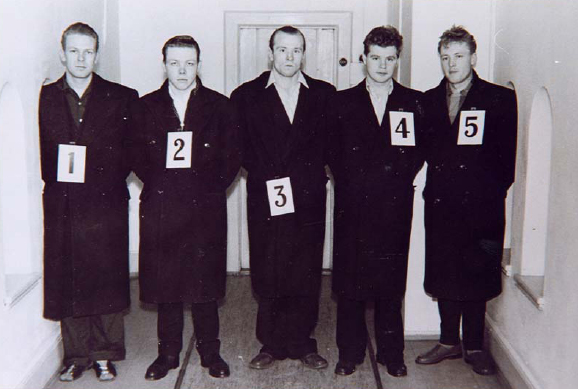
Another interesting study I wish to just bring forth, mentioned in Malcolm Gladwell's Blink. He mentioned that our brain thinks in two separate ways. One in pictures, the other in words. But if we transfer them from one to the other form, it becomes vague or inaccurate. In the example given, a person saw the face of a criminal. She roughly knew what the person look like. If the criminal were to stand among a line of innocent but similar looking people, she could instantly recognise him. So, she knows exactly how the criminal look. But when she was asked to describe him exactly from memory even if she just looked at his face 5 seconds ago, she cannot. Worse, after trying to describe him exactly, the accuracy of identifying the criminal after that greatly decreases. My thoughts is that if there are every word to describe every thing, could a really intellectual person create a "border crossing" between our two separate way of thinking? Transfer image into words. Thoughts into words. Coding of
substance itself. That, would indeed be phenomenal...

 There is a reason why up till now, my judgement of understanding is by comparing one's vocabulary of the English language. Why not Malay or Mandarin? I read this book titled "Border Crossings" by Lee Su Kin, Thang Siew Ming and Lee King Siong. The study they carried out proves that "one's worldview depends on the language through which knowledge was acquired". Non-English languages are strongly tied to the source in which they come from, be it culturally, morally or even emotionally. One can never escape the cultural implications of the language used. Which is why it is impossible to explain certain worldviews in the Malay language for example. Because the Malays, like most Asian societies, already have strong conservative backgrounds less open to diversity and openness. It reflects in the language unwillingly. It become a non-neutral language for knowledge. English is a global language predominantly used worldwide in most important sectors. Business, law, economics and science. It is a world language used by various people, especially bilingual or multilingual speakers, thus its culture is the world. English is non-ethnic and neutral. A study of Singapore was made comparing English educated and Chinese educated speakers. It have been found that English educated speakers are more liberal to new thoughts and multiculturism whereby predominantly Mandarin speakers are more culturally attuned to mainland China and its values. A side effect on predominantly English speakers however is they regarded Mandarin and China as antiquated and "backwards". Which is bad, but it does prove my argument on having more knowledge leading to manipulation. Thus, English language is the barometer for liberal sophistication and knowledge.
No comments:
Post a Comment